Codex Health
Creating collaborative patient care plans to streamline care coordination across providers.
Role
Product Design Intern
Year
2021
Duration
4 weeks
Skills
Prototyping
Research
Tools
Figma
Team
Product Partners
Front-end &
Back-end Developers
Background
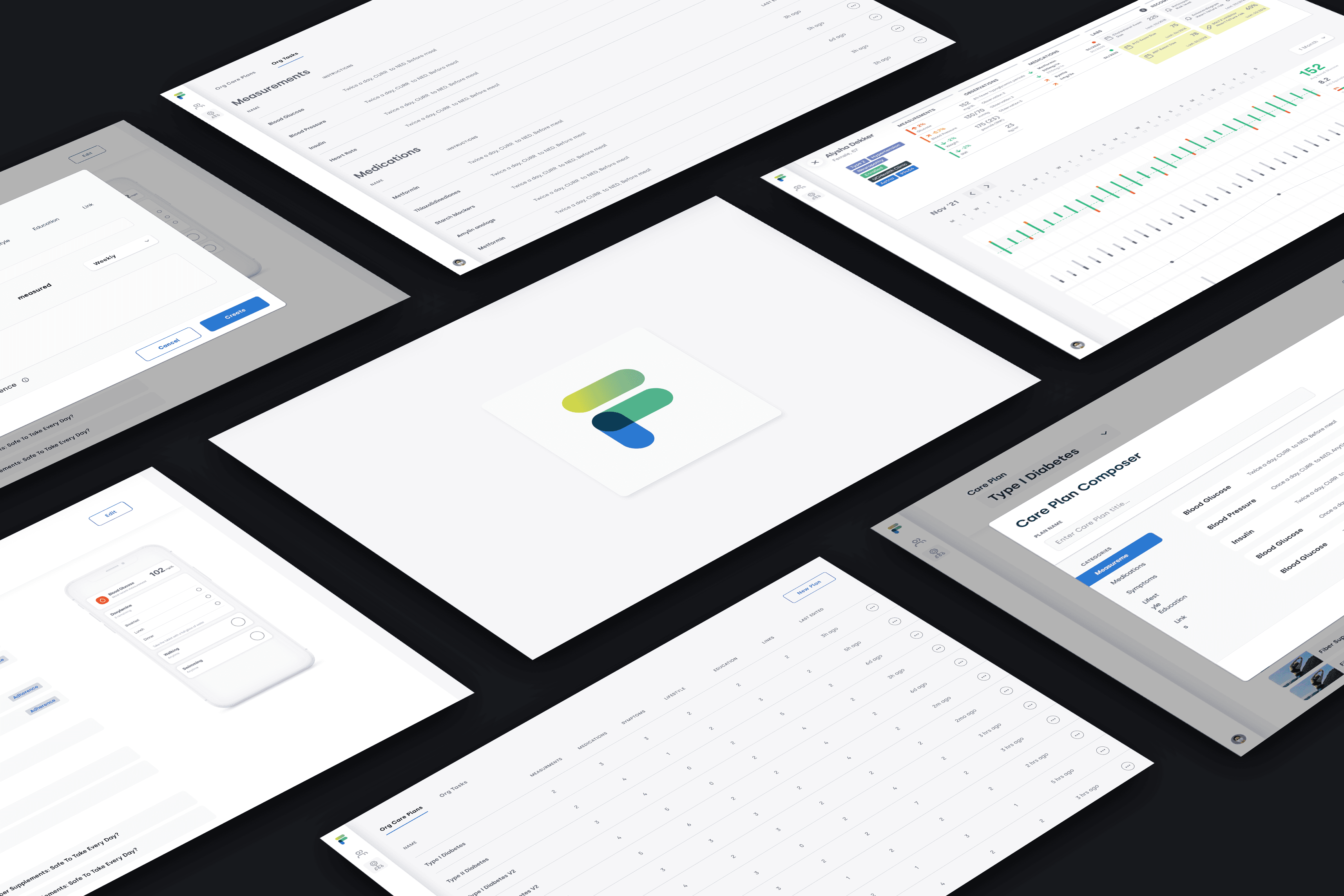
I joined Codex as they developed Foresight, a medical analytics platform for cohort discovery, predictive analytics, and remote patient monitoring, alongside Allie, a patient-facing mobile app. These products connected through Care Plans—frameworks enabling continuous monitoring, real-time clinical response, and task assignment that clinicians managed on Foresight and patients accessed through Allie.
As Codex prepared to onboard real patients, I identified a critical scalability gap: care teams needed to efficiently create individualized care plans while managing large cohorts. I framed the design challenge as balancing speed, personalization, and scalability to support clinical workflows at scale.
Impact
I designed Care Plan Templates that enabled care coordinators to efficiently manage patient tasks at scale, establishing the foundation for collaborative workflows across Codex's care provider platform.
Approach
To understand care provider workflows, I partnered with UCHealth and Stanford Health to interview care coordinators and clinicians. Over the first week, I spoke with three UCHealth professionals, synthesizing findings into three primary personas: Physicians managing long-term protocols, Diabetes Educators identifying at-risk patients, and Operational Technicians navigating legacy systems.
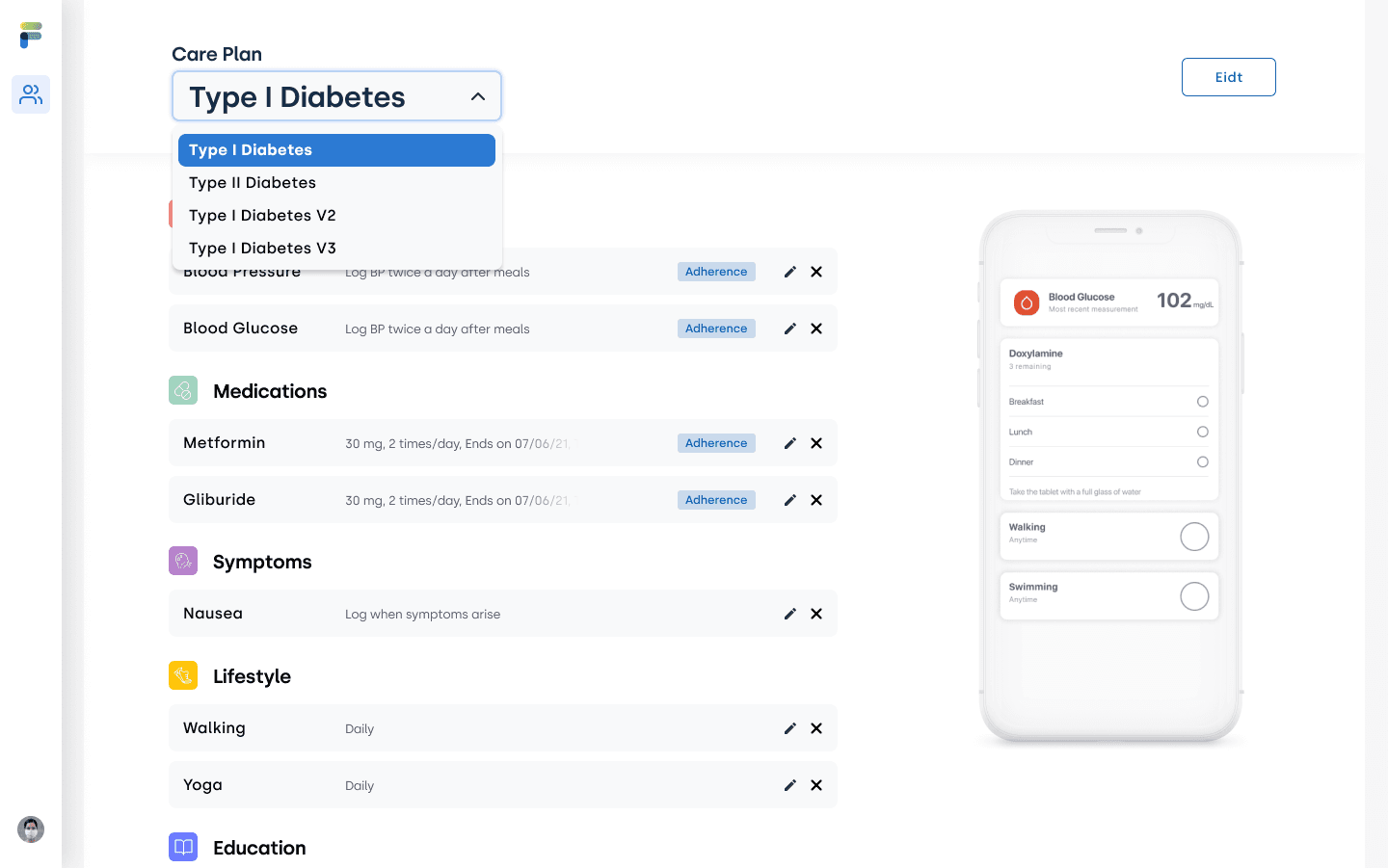
Variants for customized care.
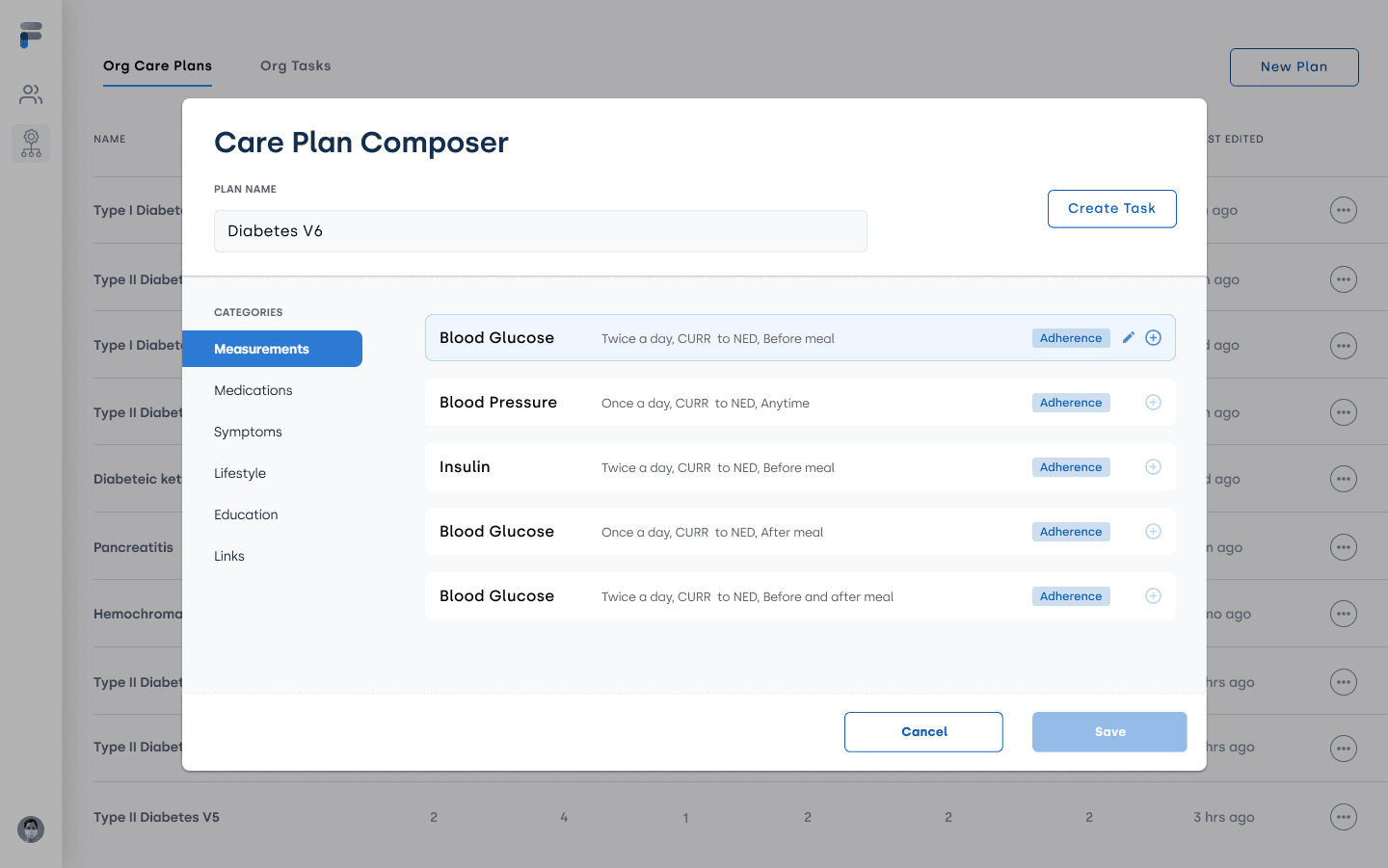
Application of Care Plans per patient.
I compiled key requirements: sharable tasks, multi-user editing, and scannable efficiency—while noting our sample's limitations and the need for broader validation.

Retrospective
01
Build minimally lovable products, then argue-in additional features
It's ok to dream big and (maybe) arrive at an ideal solution that both functions well and is delightful to use. However, aligning with roadmap and product cycle priorities is essential to both shipping designs for validation and aiding in the iterative process. Thus, focusing on nailing down core experiences allows for greater freedom in later cycles to explore periphery features.
02
Cross-communication and documentation is key
Keep in mind engineering concerns and design from pre-existing assets or design systems to maintain product visual consistency and make engineers' lives a whole lot better. But still learn to stand firm in necessary design decisions that would drastically improve usability, even if it might take a bit more time to implement.
03
Design to change the way people work (hopefully for the better)
Much of the healthcare industry and the fashion in which care is administered is poorly designed and outdated. Although specificity is important in the individual care of patients with acute conditions, learning to generalize through bulk actions with options for customization can greatly reduce redundant actions and allow care providers to focus on what truly matters—their patients.
Special Thanks
None of this would have been possible without the continual support and empowerment from my mentor figures Murari Srinivasan and Charlie Bitton. Thank you for entertaining and giving voice to my ideas, and truly giving me creative freedom to explore and learn across multiple teams.