Visa Digital Experience Hub
Designing a flexible, white-label home for card management, built on widgets and quick actions.
Role
Product Designer
Year
FY2026
Duration
12 weeks
Skills
Design systems
Mobile & web design
Product strategy
AI prototyping
Tools
Figma
Replit
Team
Product Partners
Front-end &
Back-end Developers
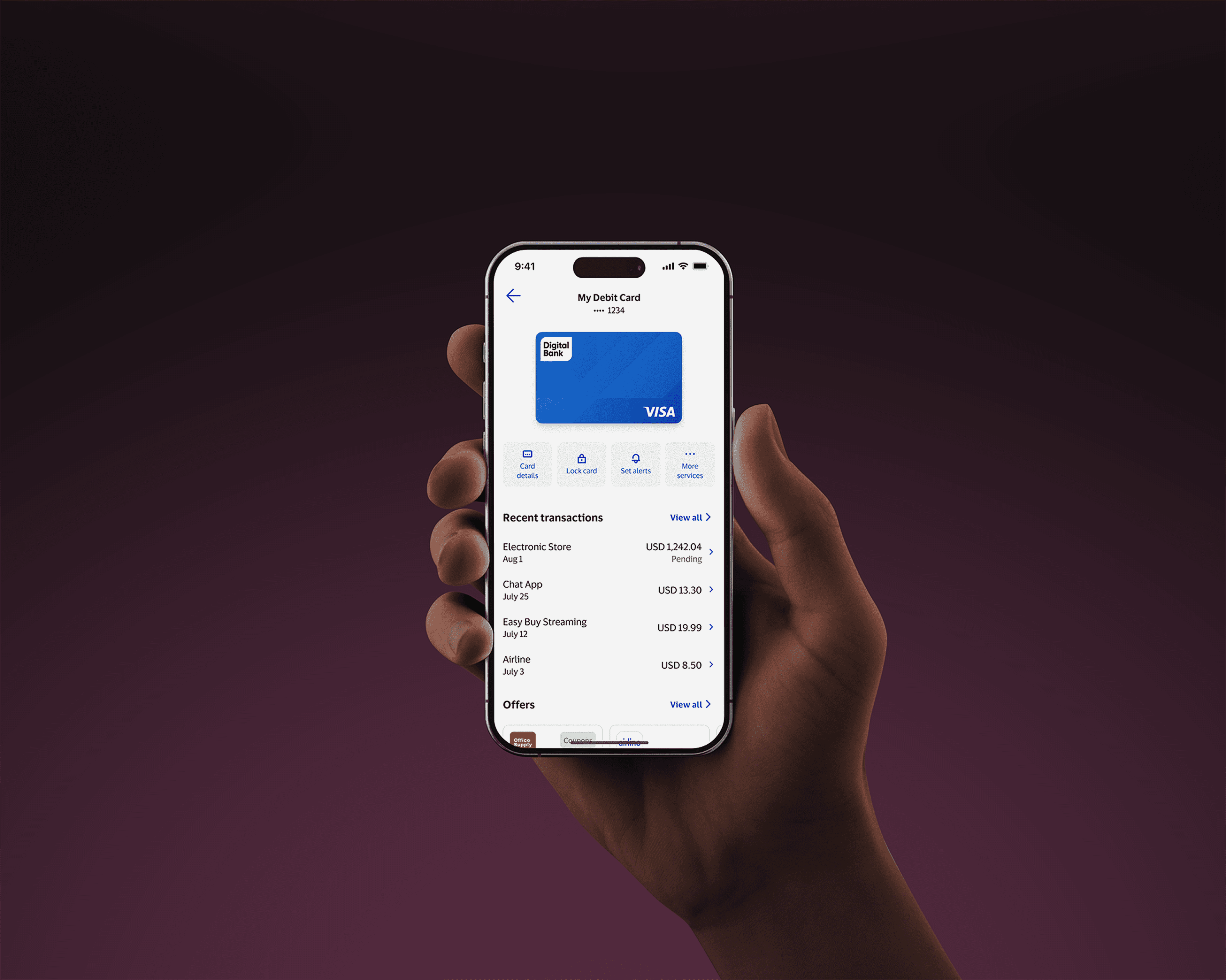
I designed a modular card management platform that enables 70+ card issuers to deliver unified digital experiences, establishing scalable design foundations that position Visa competitively before its 2026 legacy solution sunset.
Unified siloed SDK features through a parent-child schema and deep-linking system, surfacing previously buried functionality at the landing page level and eliminating fragmented user experiences.
Reduced client decision fatigue by curating quick actions, pivoting from full customizability to strategic recommendations that decreased redundant implementations.
Background
The financial services industry is undergoing rapid digital transformation, yet many card issuers (particularly in the long-tail segment) struggle to meet consumer expectations for seamless, real-time mobile services due to high technical development costs and complex maintenance requirements.
In response, we developed Visa Digital Experience Hub (VDEX) to consolidate essential card services into a single, easily integrable platform that enables issuers to deliver superior digital experiences without extensive technical infrastructure, with an initial focus on existing Visa clients and a longer-term vision to expand through channel partners.
I've led VDEX from since early ideation, collaborating with VP-level product partners to secure leadership buy-in, designing through MVP and launch phases targeting early 2026.

The original platform was "just-enough" as a solution, acting as a laundry list of links into card management features.
Process
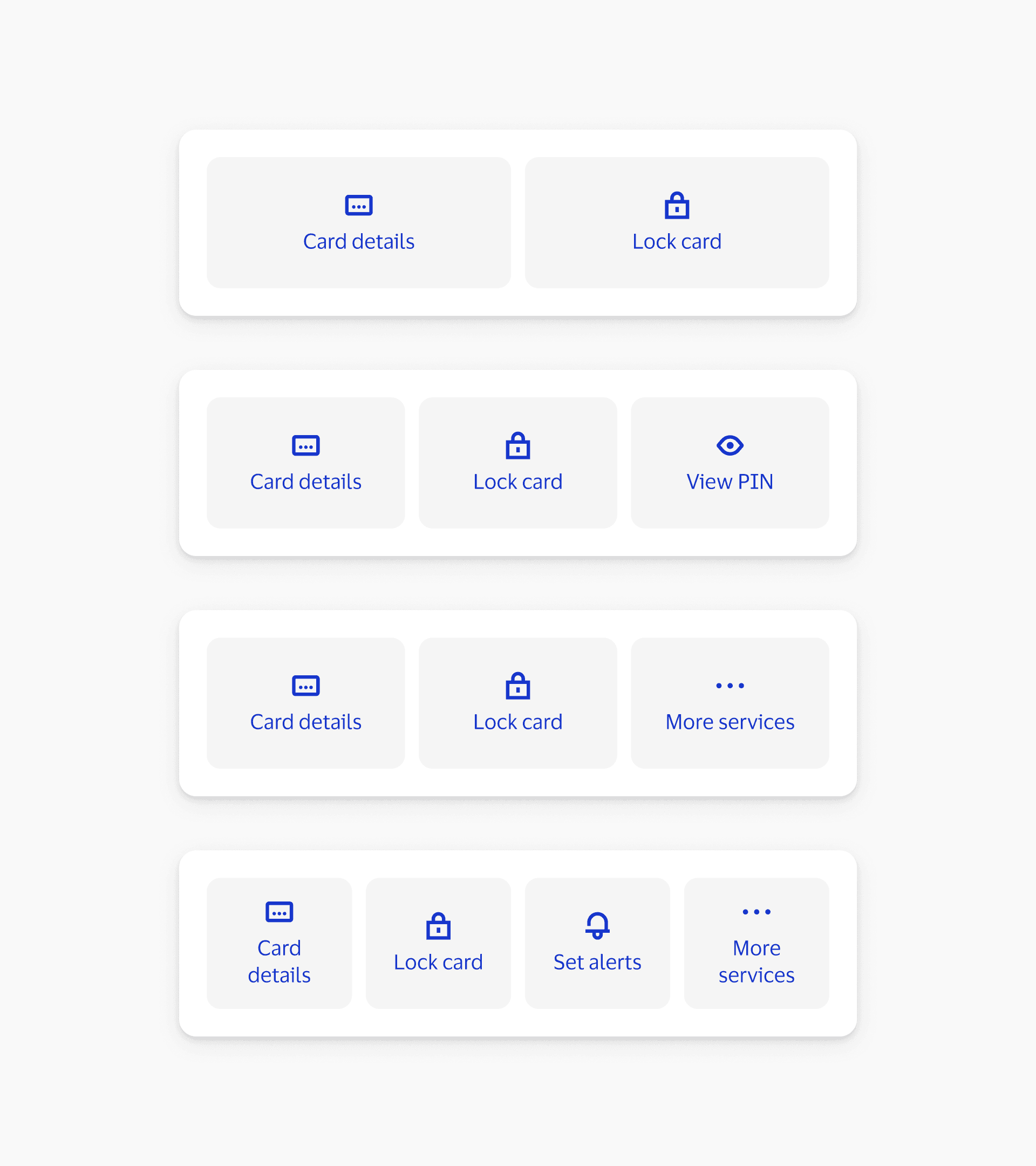
Understanding the backend API infrastructure revealed that critical features were siloed within individual SDKs, inaccessible from the main interface. I advocated for a unified quick action design and developed a "parent-child" schema with engineering teams to enable deep-linking into sub-features while accounting for various system states.
After leveraging sales data to understand feature adoption, we pivoted from complete customizability to a curated set of recommended quick actions, reducing client decision fatigue and feature redundancy. I also adapted our mobile design system into modular blocks and contributed new patterns optimized for VDEX's use cases.
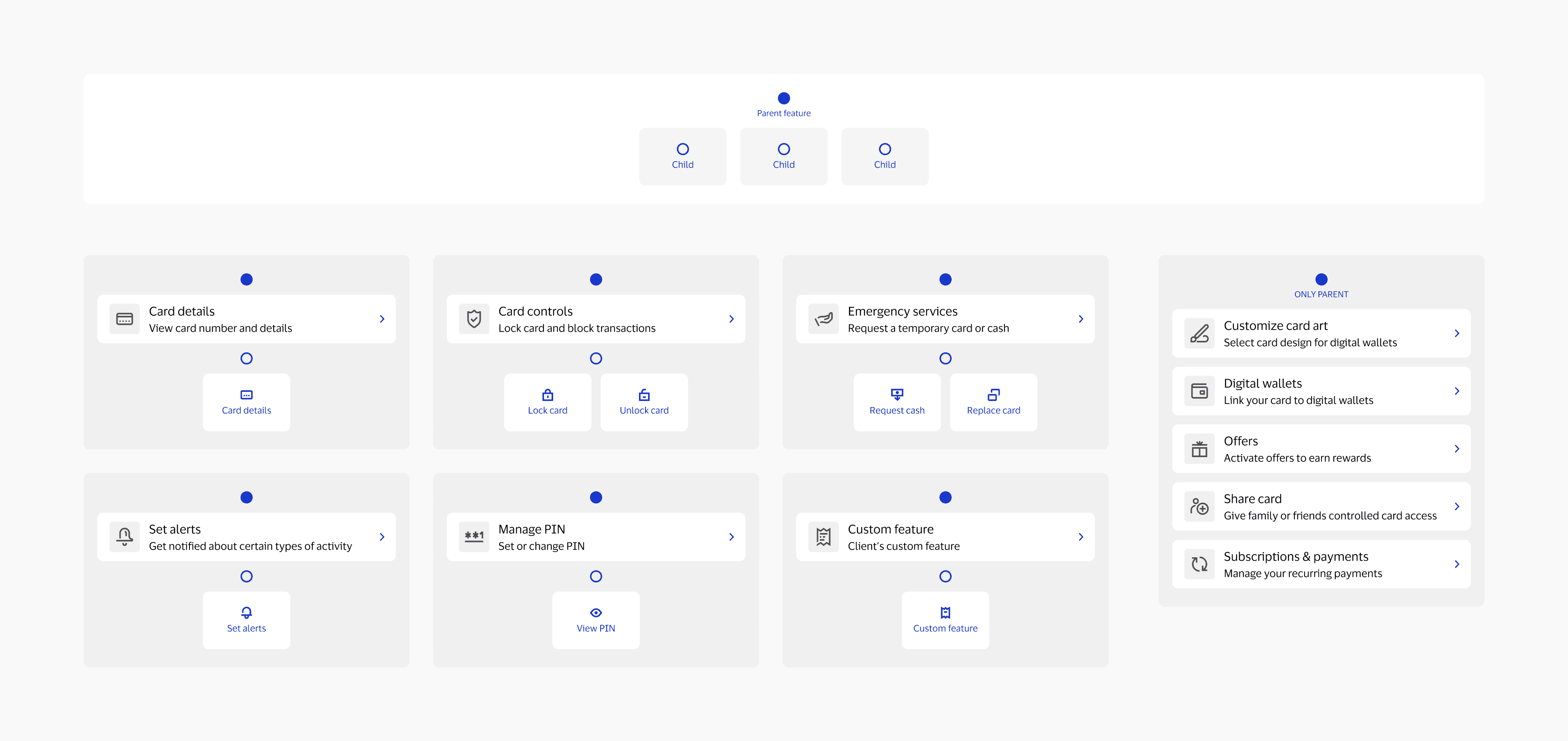
Created robust "parent-child" framework, selectively extracting useful quick actions for relevant features.
Approach
Visa's strategy packages card management tools (features) into individual SDKs that clients can mix and match based on their needs. VDEX needed to unify these siloed SDKs into one cohesive platform, presenting a unique challenge: designing a system that works seamlessly without knowing which feature combinations clients would ultimately purchase.
To address this, I established a modular system of customizable blocks that maintain visual and experiential consistency regardless of which SDKs clients adopt. This approach ensures the platform remains cohesive whether clients select all features or specific SDKs, creating a scalable foundation that can adapt to diverse client needs and support future expansion beyond the first release.
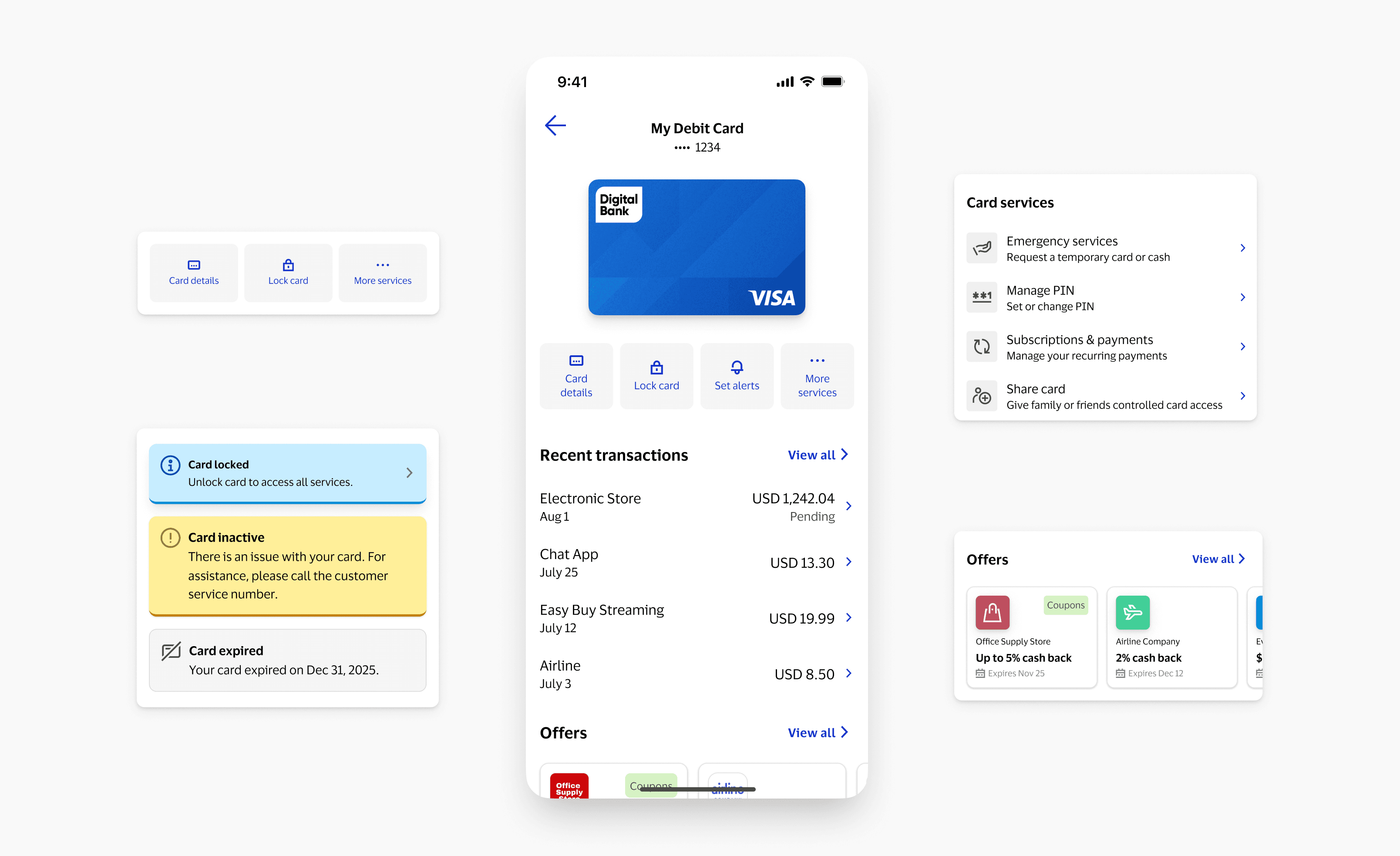
Visa Digital Experience Hub pilot is set to launch FY2027, with future enhancement support following shortly thereafter.
Success Metrics
Retain current clients with this immediate solution, and aim to grow new partnerships.
Grow average feature adoption from a baseline of 6 features.
Retrospective
01
Increase Frequency of Design-Dev Demos
Seeing implemented screens only at the end of development cycles led to rushed solutions for edge cases like missing data and error states. More frequent demos throughout would have enabled proactive design decisions.
02
Strengthen Cross-Team Design Coordination
Since we didn't control SDK experiences managed by different teams, we occasionally designed beyond implementation constraints. Earlier design-level coordination with SDK teams would have helped us work within realistic parameters from the start.
Feedback
I'm excited to see Josh further develop these concepts in collaboration with our excellent design research partners and am thrilled to already be witnessing the positive impact of Josh and this talented team all "shifting left" in our design practice.
Ian Anderson Sr. Design Manager • Global Design